 English
 中文简体
中文简体
Home / News / Industry News / Wrinkle Recovery Testing and Care Guidelines for Satin silk cloth fabric wholesale
Industry News
Content
For high-end fashion and luxury bedding industries, the elegance of **Satin silk cloth fabric wholesale** is often challenged by its susceptibility to creasing. Maintaining the fabric's flawless surface requires technical proficiency, from the initial yarn preparation to the final garment pressing. B2B procurement professionals must prioritize suppliers who provide materials with verified wrinkle recovery performance to ensure **Minimizing permanent creasing** during manufacturing and logistics. WuJiang City Hongyuan Textile Co., Ltd., deeply rooted in the "Silk Capital," utilizes over 30 years of expertise and advanced facilities, including 400 double twisting equipment, to optimize the performance and handle of our satin silk fabrics.
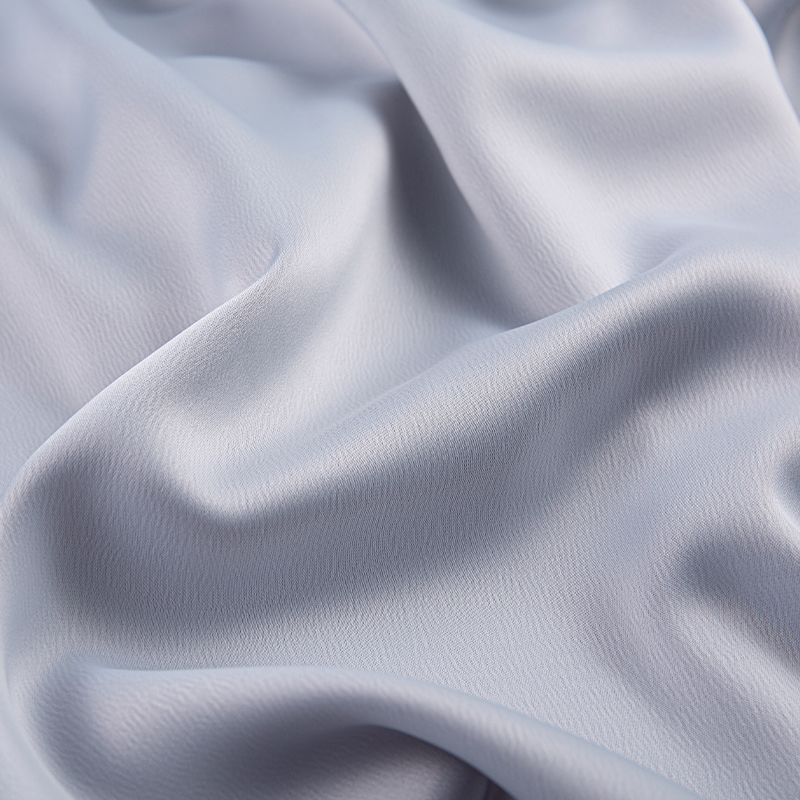
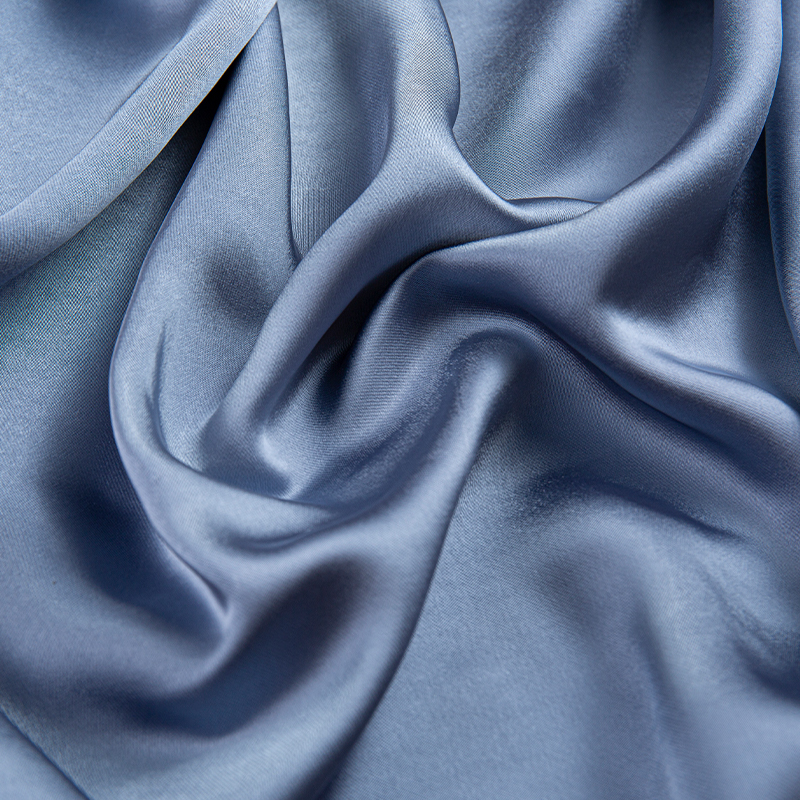
HY228 190GSM Ant Crepe Satin, Medium Ant Silk Dress Shirt Fashion Gray Fabric
Wrinkle recovery is not a subjective metric; it is a measurable property based on material elasticity.
The standard methodology for **Wrinkle resistance testing** standards involves creasing a fabric specimen using a standard loading device (e.g., 5 pounds for 5 minutes). The most common test is the Wrinkle Recovery Angle (WRA), typically conducted under AATCC} 128 or similar ISO standards. This test quantifies the fabric's ability to spring back to its original flat state, providing an objective measure of the material's elastic memory.
The **Silk fabric wrinkle recovery** angle measures the degree (in degrees) to which the fold opens up. A higher angle indicates better recovery. For high-quality **Satin silk cloth fabric wholesale**, a total recovery angle (warp + weft) exceeding 250 degrees is generally considered excellent. Materials that show low WRA require more rigorous pressing during manufacturing and are at higher risk of showing permanent creases, demanding close attention during procurement.
The material's natural structure and finishing processes dictate its ultimate recovery performance.
The core structural advantage in satin lies in its weave. The long warp floats of the satin weave allow threads to shift slightly and relax tension more easily than the tightly interlaced threads of a plain weave. Furthermore, the yarn twist, which we control precisely using our double twisting equipment, is crucial for **Minimizing permanent creasing**. A properly twisted yarn provides enhanced elasticity and bulk, aiding in the fabric's ability to rebound after compression.
While silk is a natural fiber, careful finishing can significantly improve its performance. Specialized silk softening agents can relax the fibers, reducing the severity of creases formed under pressure. However, B2B buyers must be cautious; over-treatment, particularly with harsh chemical resin finishes, can compromise the natural soft hand feel of the **Satin silk cloth fabric wholesale**. The goal is achieving improved **Silk fabric wrinkle recovery** without introducing stiffness.
Comparison: Weave Type vs. Wrinkle Recovery Performance (Silk):
| Weave Type | Primary Wrinkling Factor | Wrinkle Recovery Angle (Relative) |
|---|---|---|
| Plain Weave Silk (e.g., Habotai) | Tight interlacing restricts thread movement | Low (Prone to permanent, sharp creases) |
| Satin Weave Silk | Long floats allow for stress relaxation | High (Good natural **Silk fabric wrinkle recovery**) |
Proper environmental control and pressing techniques are extensions of the manufacturing quality control.
During shipping and warehousing, maintaining **Optimum silk storage** humidity (ideally 60% to } 65% RH) and a stable temperature is essential. If silk is stored in very dry conditions, its natural moisture content drops, making the fibers brittle and highly susceptible to permanent creasing when rolls are compressed. If stored too wet, mold and dye migration become risks. Proper control ensures the fabric arrives in optimal condition for manufacturing.
The integrity of the final garment depends on adhering to strict **Garment pressing guidelines** for satin. Pressing must always be done on the reverse side of the fabric using a low-to-medium heat setting (typically steam iron on silk setting, or below } 130^circ C) and a pressing cloth. Direct high heat can permanently flatten the warp floats, destroying the characteristic luster and causing the final product to fail inspection, despite high initial **Silk fabric wrinkle recovery** angle results.
For B2B textile professionals, the reliable performance of **Satin silk cloth fabric wholesale** is confirmed by technical data like the **Silk fabric wrinkle recovery** angle, validated through **Wrinkle resistance testing** standards. Beyond purchasing, strict adherence to **Optimum silk storage** and professional **Garment pressing guidelines** is mandatory for **Minimizing permanent creasing** and protecting the fabric's luxury appeal. WuJiang City Hongyuan Textile Co., Ltd. is committed to providing textiles engineered for resilience, backed by our comprehensive experience and complete production system.

Phone: +86 18806251599
TEL: +86 0512 63062555

Address: No. 1788, Yuanqu Road, Shengze Town, Wujiang District, Suzhou City, Jiangsu Province, China