 English
 中文简体
中文简体
Industry News
Content
- 1 What Makes Silk Satin "Heavyweight"?
- 2 5H Satin Weave: Structure, Weight, and Character
- 3 8H Satin Weave: The Standard for Luxury Heavyweight Silk
- 4 Choosing the Right Heavy Weight Silk Satin for Your Project
- 5 How to Verify Heavy Weight Silk Satin Quality Before Buying
- 6 Care and Handling of Heavyweight Silk Satin
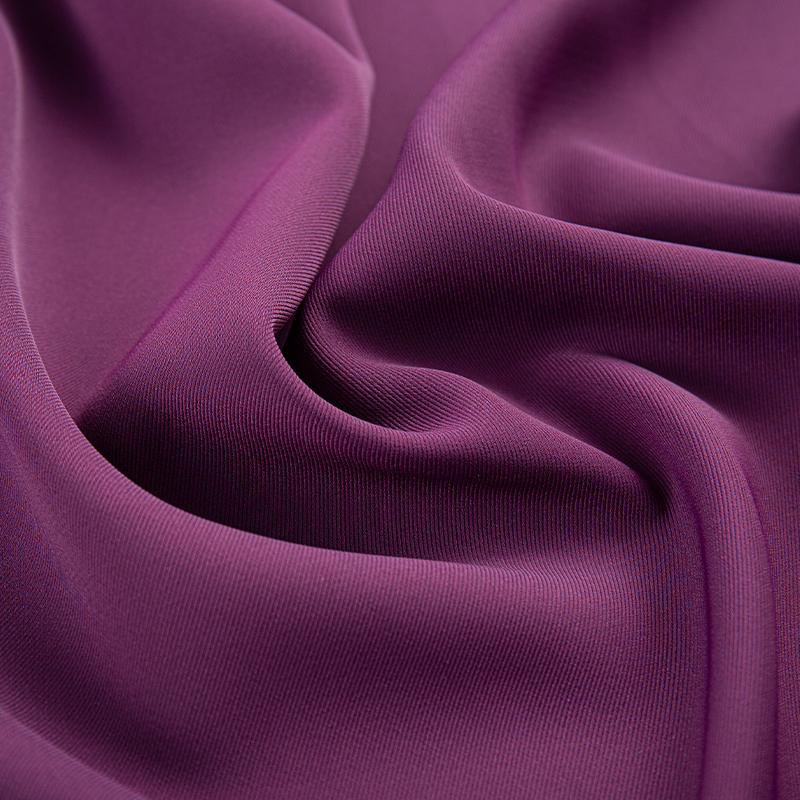
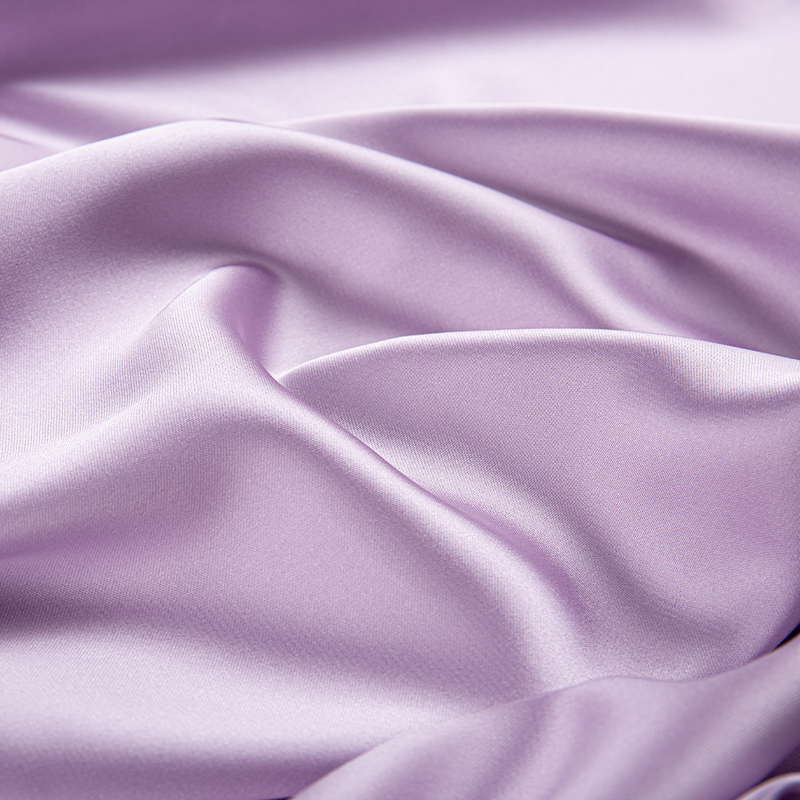
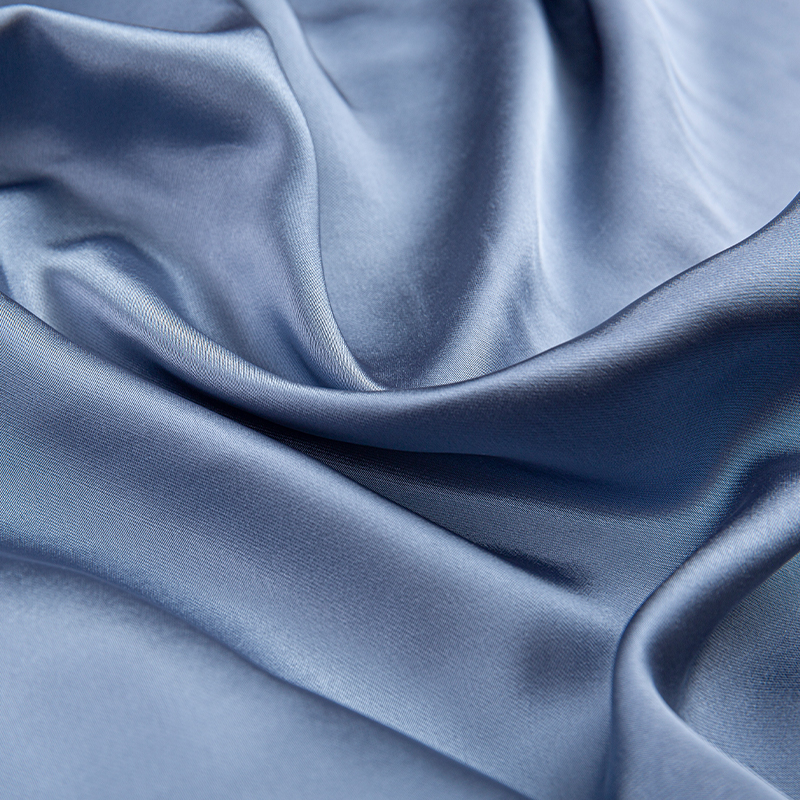
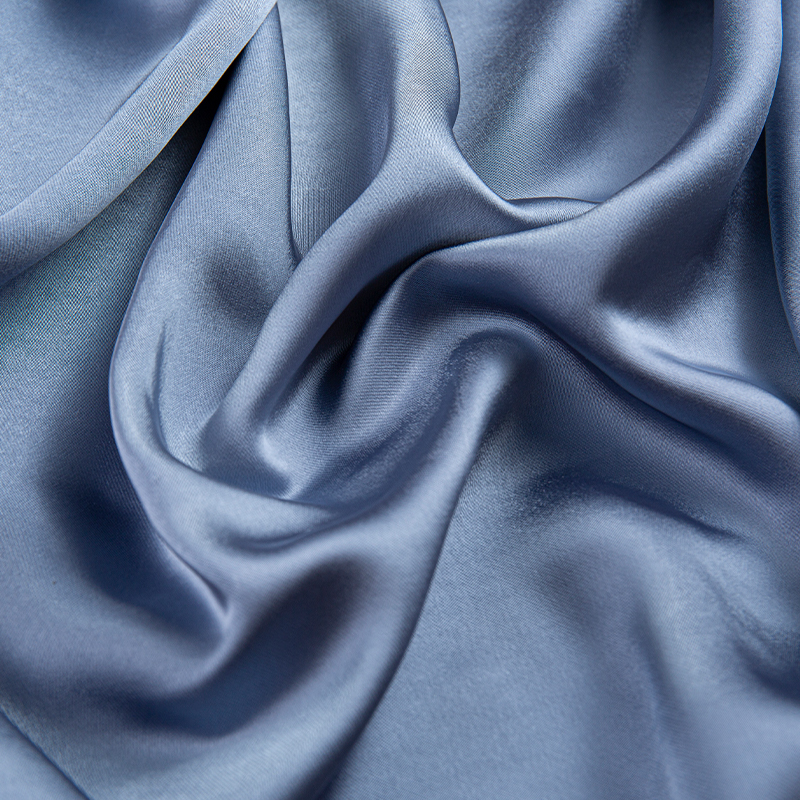
Heavy silk satin fabric delivers the richest drape, deepest lustre, and most structured hand-feel in the silk family. The weight and sheen are determined primarily by the weave structure — either a 5-harness (5H) or 8-harness (8H) satin weave — and the momme (mm) count of the silk yarn. For most tailoring, bridal, and luxury interior applications, a minimum of 19mm to 30mm is considered heavyweight, with 8H weaves producing a noticeably more fluid, mirror-like surface than 5H.
What Makes Silk Satin "Heavyweight"?
Silk fabric weight is measured in momme (mm), a unit that describes the weight in pounds of a 100-yard by 45-inch piece of fabric. The higher the momme, the denser and heavier the cloth. For satin specifically, weight is also influenced by the weave structure — more float threads on the surface mean more silk exposed per square inch.
Momme Weight Classification for Silk Satin
| Momme Range | Classification | Typical Use |
|---|---|---|
| 8 – 12 mm | Lightweight | Linings, scarves, lightweight blouses |
| 14 – 18 mm | Medium weight | Dresses, daywear, soft furnishings |
| 19 – 25 mm | Heavyweight | Bridal gowns, eveningwear, tailored jackets |
| 26 – 30+ mm | Ultra-heavyweight | Upholstery, luxury bedding, couture structured garments |
A 30mm silk satin, for example, contains roughly three times the silk fibre mass of a 10mm satin. The additional density creates natural body and resistance to creasing — qualities that lightweight silk cannot replicate regardless of finishing treatments.
5H Satin Weave: Structure, Weight, and Character
A 5-harness satin (5H satin) is woven on a five-shaft loom where each weft yarn floats over four warp ends before interlacing on the fifth. This 4-over-1 pattern places roughly 80% of the yarn surface on the face of the cloth, producing a smooth, lustrous finish with a subtle texture that is slightly more matte than 8H constructions.
Key Characteristics of 5H Satin
- Float length: Four-yarn floats create a surface that is bright but retains a soft, woven texture — not a mirror finish. This suits daywear and structured garments where a restrained sheen reads as more formal.
- Weave stability: Shorter floats mean more interlacing points per inch, resulting in a tighter, more dimensionally stable fabric. A 22mm 5H satin will hold a bias cut more cleanly than an equivalent 8H.
- Typical weight range: 5H silk satins are commonly produced at 16mm to 25mm. The additional interlacing points make it harder to achieve ultra-high momme counts without the fabric becoming stiff.
- Drape quality: Medium drape — the fabric falls in controlled folds rather than fluid cascades. Ideal for structured bodices, tailored sleeves, and pleated skirts that need to hold shape.
- Durability: Shorter floats are less prone to snagging compared to 8H. For heavily worn items such as bridal trains that move across flooring, 5H offers a practical advantage.
8H Satin Weave: The Standard for Luxury Heavyweight Silk
An 8-harness satin (8H satin) is woven on an eight-shaft loom where each weft yarn floats over seven warp ends before interlacing. This 7-over-1 float structure places approximately 87.5% of the yarn on the face, creating the signature deep, glass-like lustre associated with couture and luxury bedding silks.
Key Characteristics of 8H Satin
- Float length: Seven-yarn floats allow light to reflect uniformly across a wide plane, producing the maximum optical brilliance possible in a woven silk. The surface approaches the reflectivity of charmeuse but with far greater substance.
- Weight potential: Because fewer interlacing points are needed per repeat, 8H weaves can accommodate higher yarn packing densities. Heavyweight 8H satins at 30mm to 40mm are routinely produced for couture houses and luxury bedding brands.
- Drape quality: Superior fluid drape — the fabric moves in long, unbroken waves. A 30mm 8H satin over a full skirt creates the heavy, cascading silhouette seen in haute couture eveningwear.
- Handle: Softer and more supple than equivalent 5H due to the reduced interlacing. The back of an 8H satin has a noticeably more matte, woven appearance — useful for reversible applications.
- Snag sensitivity: Longer floats are more vulnerable to pulls and snags. 8H silk satin requires careful handling during cutting, sewing, and wear — sharp pins and rough surfaces should be avoided.
5H vs 8H Satin Weave — Direct Comparison
| Property | 5H Satin Weave | 8H Satin Weave |
|---|---|---|
| Float length | 4 yarns (over 4, under 1) | 7 yarns (over 7, under 1) |
| Surface coverage | ~80% weft on face | ~87.5% weft on face |
| Lustre level | High, soft sheen | Very high, mirror-like |
| Typical momme range | 16 – 25 mm | 19 – 40+ mm |
| Drape | Controlled, structured | Fluid, cascading |
| Dimensional stability | Higher | Moderate |
| Snag resistance | Better | Lower |
| Best for | Tailoring, daywear, structured bridal | Couture gowns, luxury bedding, eveningwear |
Choosing the Right Heavy Weight Silk Satin for Your Project
The decision between weave structures and momme weights should be driven by the mechanical demands of the end use, not aesthetics alone. Below is a practical guide to matching fabric specification to application.
Application-Based Selection Guide
- Bridal gowns with structured bodices: A 22mm to 24mm 5H satin provides the body needed to support boning and underwire without requiring interfacing on every panel. The moderate lustre reads beautifully under wedding photography lighting without overexposing to flash.
- Full-length couture eveningwear: A 30mm 8H satin is the industry-standard choice. The fluid drape creates movement in a full skirt or column silhouette that no lighter fabric can replicate. Maison Margiela, Valentino, and similar houses specify 8H constructions at this weight range for red-carpet commissions.
- Luxury bedding and pillowcases: 25mm to 30mm 8H silk satin is the benchmark for premium bedding. At this weight the fabric is durable enough for repeated laundering (gentle cycle, 30°C maximum) while retaining the smooth surface that reduces facial creasing and hair friction.
- Upholstered cushions and decorative panels: A 30mm to 40mm heavyweight 5H satin is preferable for upholstery applications. The tighter weave resists the constant compression and friction that furniture use demands, and the more stable structure makes it easier to sew tight-radius curves over a cushion form.
- Tailored jackets and structured coats: A 19mm to 22mm 5H satin in a solid or jacquard construction provides the necessary hand and crease recovery for structured outerwear. Pair with a medium-weight silk organza underlining for additional body in the body panels.
How to Verify Heavy Weight Silk Satin Quality Before Buying
Not all fabrics labelled as heavy silk satin deliver genuine heavyweight performance. Synthetic fibres, mixed-fibre blends, and finishing treatments can mimic the appearance of real silk at a fraction of the quality. Use these practical tests to confirm you are working with authentic heavy silk satin.
- The burn test: Pull a few warp and weft threads and burn them with a lighter. Pure silk burns slowly, smells like burning hair (protein fibre), and forms a crushable black ash. Polyester satin melts, forms a hard bead, and smells synthetic. A blend will produce a mix of both behaviours.
- The hand temperature test: Silk feels cool against the skin in the first moment of contact and then quickly warms to body temperature. Polyester satin remains at room temperature regardless of contact duration. This tactile difference is immediately apparent on a fabric with 19mm or greater momme.
- The scrunch test: Compress a section of the fabric tightly in your hand for five seconds and release. Heavyweight silk satin at 22mm and above recovers with minimal permanent creasing within 30–60 seconds. Lightweight silk wrinkles deeply and holds the crease. Polyester shows almost no creasing at all — which sounds positive but indicates synthetic content.
- Request the momme certification: Any reputable supplier of heavy weight silk satin fabric should be able to provide a material safety data sheet or test certificate confirming momme weight, fibre composition (100% Bombyx mori silk for premium quality), and weave structure. Insist on documentation for commercial orders above 20 metres.
- Check the width: Genuine heavy silk satin is typically woven at 114cm (45 inches) or 140cm (55 inches) width. Fabric presented at 150cm or wider at a very low price is almost certainly a synthetic or blended construction — high-momme pure silk is expensive to produce in wider widths.
Care and Handling of Heavyweight Silk Satin
The investment in heavy silk satin fabric is only protected by proper care. At 25mm and above, the increased yarn density makes the fabric more forgiving than lighter silks, but the basic rules of silk care still apply.
- Washing: Hand wash in cool water (below 30°C) with a pH-neutral silk detergent, or dry clean. Machine washing — even on a silk cycle — creates mechanical abrasion that progressively dulls the satin surface and weakens individual silk filaments over time.
- Drying: Roll the wet fabric in a clean white towel to remove excess water, then hang or lay flat to dry away from direct sunlight. UV exposure degrades silk protein bonds, causing yellowing and fibre brittleness within 6–12 months of repeated direct sun exposure.
- Ironing: Iron on the reverse side while the fabric is still slightly damp, using a cool silk setting (below 150°C). A pressing cloth between the iron and the fabric surface prevents the iron's soleplate from flattening the satin floats and creating permanent shiny patches.
- Storage: Store heavyweight silk satin rolled on a cardboard tube or folded with acid-free tissue at each fold line. Folding along the same crease repeatedly will eventually cause the silk filaments to split along the fold line — a particular risk with 8H constructions where the long floats are already under surface tension.