 English
 中文简体
中文简体
Home / News / Industry News / How Does the Durability of Rayon Lyocell Fabric Compare to Cotton or Silk for Long-Term Wear?
Industry News
Content
In the modern textile landscape, the quest for a fiber that balances luxury with mechanical resilience has led to the rise of rayon lyocell fabric. As a third-generation cellulosic fiber, Lyocell represents a significant leap in sustainable textile engineering. WuJiang City Hongyuan Textile Co., Ltd., with over 30 years of expertise in the "Silk Capital" of Shengze, operates a 60,000-square-meter facility dedicated to high-performance weaving. With 500 water jet looms and advanced warp drawing equipment, we have analyzed the molecular performance of various fibers to provide an objective look at rayon lyocell fabric longevity. This article explores the structural integrity and lyocell fabric durability for daily wear compared to traditional staples like cotton and silk.
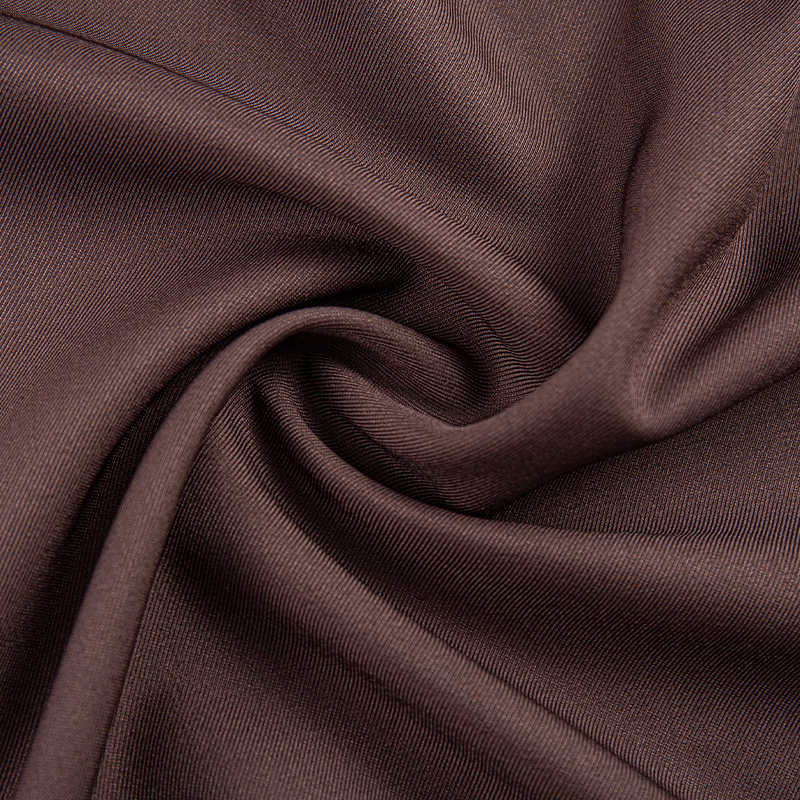
The primary engineering advantage of Lyocell lies in its high tenacity. When comparing lyocell vs cotton tensile strength, Lyocell exhibits significantly higher resistance to breaking under tension, even when wet. Unlike standard rayon, which loses up to 50% of its strength when submerged in water, rayon lyocell fabric maintains its structural bonds, making it ideal for long lasting lyocell clothing items. Silk, while incredibly strong in its dry state, is highly susceptible to degradation from perspiration and moisture. Furthermore, understanding how to wash lyocell fabric to prevent shrinkage is crucial, as its superior wet-state stability reduces the "puckering" effect often seen in low-grade cotton weaves. At Hongyuan Textile, our high-quality lyocell fabric for professional wear is woven to optimize this inherent fiber strength.
| Fiber Type | Dry Tenacity (cN/tex) | Wet Strength Retention | Resilience to Mechanical Stress |
| Rayon Lyocell Fabric | 38.0 - 42.0 | High (~85%) | Excellent |
| Upland Cotton | 20.0 - 24.0 | Increased (~105%) | Moderate (Prone to fiber fatigue) |
| Mulberry Silk | 30.0 - 35.0 | Decreased (~75%) | Low (Fragile when wet) |
Long-term wear is often compromised by surface degradation rather than structural failure. Is lyocell fabric prone to pilling? In its pure form, Lyocell has a smooth fiber profile that resists the entanglement of fibrils, a common cause of pilling in cotton blends. When evaluating lyocell vs silk for luxury bedding durability, silk often suffers from "thread shifting" or snagging due to its delicate filaments. Conversely, rayon lyocell fabric offers a robust surface that withstands repetitive friction. For high-use applications, rayon lyocell blend fabric for heavy use—often combined with synthetic or long-staple fibers—further enhances abrasion resistance. Our standardized production plant utilizes 400 double twisting sets to ensure yarn consistency, which is the best way to extend the life of lyocell garments through superior yarn density.
| Durability Factor | Cotton (Combed) | Silk | Rayon Lyocell Fabric |
| Pilling Resistance | Moderate | High | Very High |
| Abrasion Resistance | Moderate | Very Low | High |
| Color Fastness | High | Moderate (Sensitive to UV) | High (Excellent dye uptake) |
Durability in textiles also refers to the fabric's ability to resist microbial degradation and maintain comfort over years of use. Why lyocell fabric is more durable than standard rayon involves its superior moisture absorption and release cycle. By managing moisture 50% more efficiently than cotton, rayon lyocell fabric creates an environment less conducive to bacterial growth, which preserves the fiber's chemical integrity over time. In terms of lyocell fabric environmental impact vs durability, the closed-loop production not only protects the planet but results in a cleaner fiber with fewer impurities that could lead to "yellowing" or fiber rot. For those choosing between lyocell and cotton for summer durability, Lyocell's ability to remain cool and dry prevents the salt-crystallization damage often seen in cotton garments after heavy perspiration.
From a technical standpoint, rayon lyocell fabric outperforms silk in mechanical durability and matches or exceeds cotton in tensile strength and moisture management. With more than 30 years of industry experience, WuJiang City Hongyuan Textile Co., Ltd. recommends Lyocell for consumers and brands seeking long lasting lyocell clothing items. By combining the "Silk Capital" heritage with modern water-jet loom technology, we ensure that every meter of fabric produced in our 100-acre plant meets the rigorous standards of 21st-century long-term wear.
No, pure Lyocell has a very smooth fiber structure that discourages pilling. However, some rayon lyocell fabric blends may pill depending on the secondary fiber used, such as low-grade polyester.
While Lyocell is stable, it is best to wash in cold water on a gentle cycle and avoid high-heat tumble drying. This preserves the lyocell fabric durability for daily wear and maintains the garment's shape.
The difference lies in the spinning process. Lyocell uses a solvent-spinning technique that creates higher molecular orientation, resulting in a fiber that is much stronger, especially when wet, than traditional viscose rayon.
For high-performance workwear, rayon lyocell fabric is often superior due to its higher tenacity and moisture-wicking properties, though cotton is sometimes preferred for its specific heavy-duty thickness in denim.
Yes. Blending Lyocell with fibers like flax or recycled polyester creates a highly durable, abrasion-resistant textile suitable for home furnishings and heavy-duty apparel.

Phone: +86 18806251599
TEL: +86 0512 63062555

Address: No. 1788, Yuanqu Road, Shengze Town, Wujiang District, Suzhou City, Jiangsu Province, China