 English
 中文简体
中文简体
Home / News / Industry News / What is the Actual Difference Between Rayon Lyocell Fabric and Traditional Viscose in Terms of Sustainability?
Industry News
Content
In the global shift toward circular fashion, the distinction between rayon lyocell fabric and traditional viscose has become a focal point for textile engineers and B2B procurement managers. While both are man-made cellulosic fibers (MMCFs) derived from wood pulp, their environmental footprints diverge significantly due to their manufacturing chemistry. WuJiang City Hongyuan Textile Co., Ltd., established in the 1990s and located in Shengze—China's "Silk Capital"—has witnessed this evolution over 30 years. With a 60,000-square-meter facility and 500 water jet looms, we integrate heritage weaving techniques with modern sustainable materials to meet the rising demand for eco-conscious textiles.
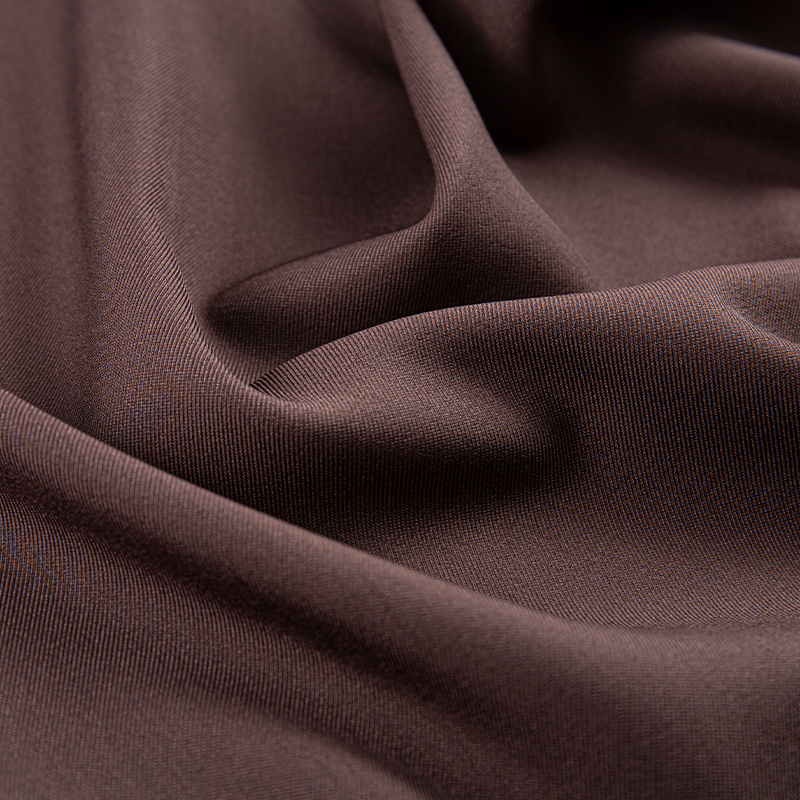
The primary environmental differentiator is the solvent used and the efficiency of its recovery. Traditional viscose utilizes an "open-loop" process involving carbon disulfide and caustic soda, which often results in chemical discharge if not strictly managed. Conversely, rayon lyocell fabric is produced via a "closed-loop" solvent spinning process using N-Methylmorpholine N-oxide (NMMO). According to the 2024-2025 Regenerated Lyocell Fiber Market Outlook, modern lyocell production now achieves a solvent recovery rate of over 99.8%, virtually eliminating chemical waste. This makes sustainable lyocell fabric for eco-friendly apparel the preferred choice for brands aiming for zero-discharge manufacturing standards.
Source: Intel Market Research - Regenerated Lyocell Fiber Market Outlook 2025-2032
While viscose requires multiple chemical bath stages that generate sulfur-rich byproducts, lyocell simplifies the process into a direct dissolution method. This efficiency reduces the overall chemical oxygen demand (COD) in wastewater, as shown in the comparison below.
| Feature | Traditional Viscose | Rayon lyocell fabric |
| Solvent Type | Carbon Disulfide (Toxic) | NMMO (Non-toxic/Organic) |
| Recovery Rate | Low to Moderate (Open-loop) | >99% (Closed-loop) |
| Water Usage | High (Extensive washing needed) | Low (Up to 50% reduction) |
| Environmental Impact | High risk of air/water pollution | Minimal ecological footprint |
Sustainability is also measured by the land and water required to produce the fiber. Traditional viscose often sources pulp from a variety of wood types, which can occasionally lead to deforestation concerns if the supply chain lacks transparency. In contrast, high-quality lyocell rayon fabric for wholesale is typically sourced from sustainably managed eucalyptus forests. According to the 2025 Sustainable Textiles Report by Bio Based Press, the market share of FSC and PEFC certified MMCFs has risen to over 65%, with lyocell leading the transition due to eucalyptus trees requiring significantly less irrigation and pesticides than cotton or traditional pulp sources. This allows wholesale lyocell fabric suppliers in China, like Hongyuan Textile, to offer products that satisfy the stringent ESG requirements of international buyers.
Source: Bio Based Press - Sustainable Textiles: The Way Forward 2025
The energy intensity of lyocell is slightly higher due to the precision required in solvent recovery, but this is offset by its drastically lower water consumption and higher yield per acre of land.
| Resource Metric | Viscose Production | Rayon lyocell fabric Production |
| Water Consumption | ~3,000 - 5,000 Liters/kg | ~1,500 - 2,000 Liters/kg |
| Land Use Efficiency | Moderate | High (Eucalyptus-based) |
| Biodegradability | Biodegradable (6-12 weeks) | Fully Biodegradable (Faster in soil/sea) |
From an engineering perspective, rayon lyocell fabric offers mechanical advantages that traditional viscose cannot match, particularly in wet strength. When wet, traditional viscose loses up to 50% of its tensile strength, whereas breathable lyocell rayon blend fabric retains its structural integrity, making it suitable for high-performance activewear and durable home textiles. WuJiang City Hongyuan Textile Co., Ltd. leverages our 400 sets of double twisting equipment and advanced warp drawing technology to produce soft touch rayon lyocell textiles that maintain dimensional stability after multiple industrial wash cycles—a key requirement for bulk B2B procurement.
Yes, rayon lyocell fabric is fully biodegradable and compostable. Because it is made from natural cellulose and processed without toxic cross-linking agents, it can break down in both soil and marine environments significantly faster than synthetic fibers.
The price reflects the capital-intensive "closed-loop" technology and the use of specialized organic solvents. However, for B2B buyers, the high-quality lyocell rayon fabric for wholesale often provides better value due to its superior durability and lower return rates in retail.
As a professional manufacturer, Hongyuan Textile specializes in breathable lyocell rayon blend fabric. We can adjust the warp and weft density using our advanced weaving facilities to meet specific hand-feel or strength requirements.
No. One of the main technical benefits of soft touch rayon lyocell textiles is their improved dimensional stability. While all cellulosic fibers have some shrinkage, lyocell experiences much less distortion during laundering than traditional viscose.
WuJiang City Hongyuan Textile Co., Ltd. is located in the national silk-intensive area of Shengze. We follow standardized production protocols across our 100-acre plant, ensuring efficient energy use and high-precision weaving that minimizes material waste during the manufacturing process.

Phone: +86 18806251599
TEL: +86 0512 63062555

Address: No. 1788, Yuanqu Road, Shengze Town, Wujiang District, Suzhou City, Jiangsu Province, China