
 English
 中文简体
中文简体
Home / Products / Lyocell Fabric / DS586 Smooth and breathable Doris 3/1 twill Polyester Light Pink fabric
Custom DS586 Smooth and breathable Doris 3/1 twill Polyester Light Pink fabric
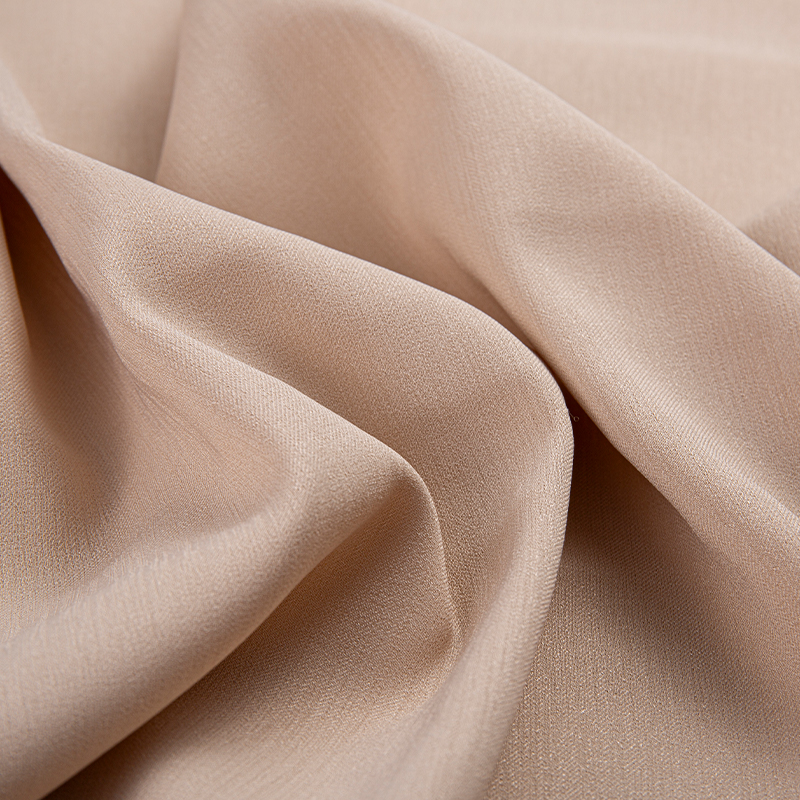
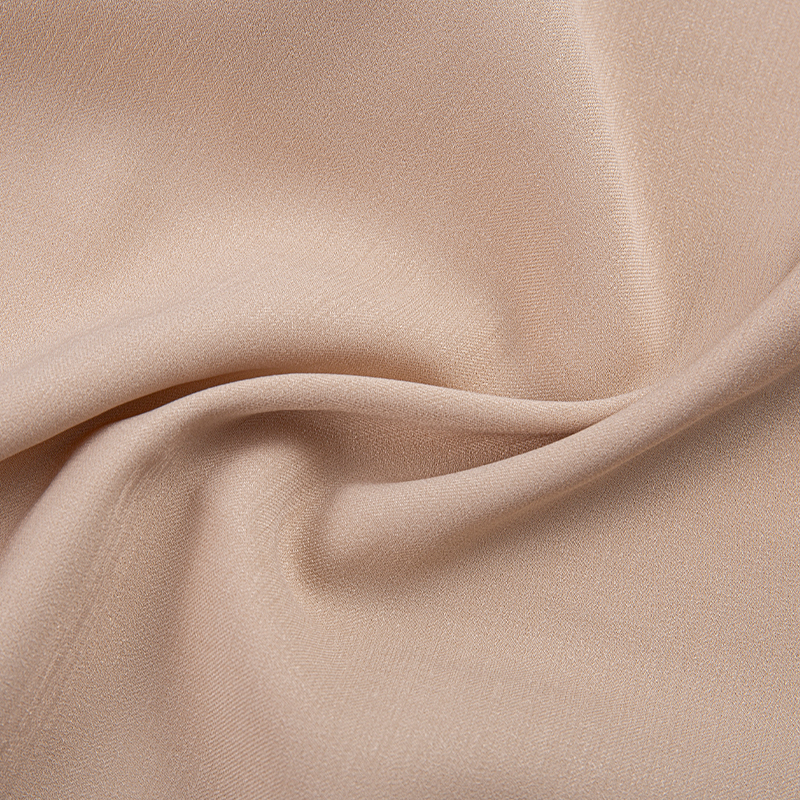
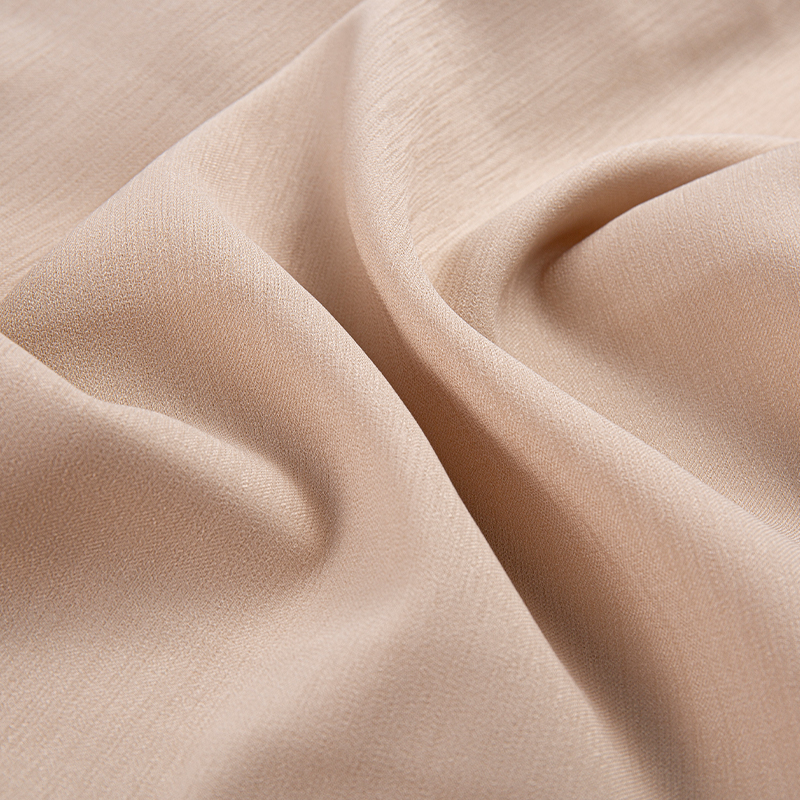
Doris 3/1 Twill is a 3/1 twill fabric woven with Doris fiber (Modal or high-count regenerated cellulose fiber), which combines the environmentally friendly characteristics of regenerated fiber with the three-dimensional texture of twill weave. Its surface presents a clear asymmetric twill texture, and its texture is soft, smooth, breathable and skin-friendly. It is suitable for business casual wear, light luxury wear, sustainable fashion and other fields. It finds a balance between sustainability, comfort and aesthetics. It avoids the shortcomings of pure cotton being easy to wrinkle and polyester being stuffy, and enhances the design sense with its unique twill texture. It is an ideal choice for brands pursuing an environmentally friendly and light luxury style.
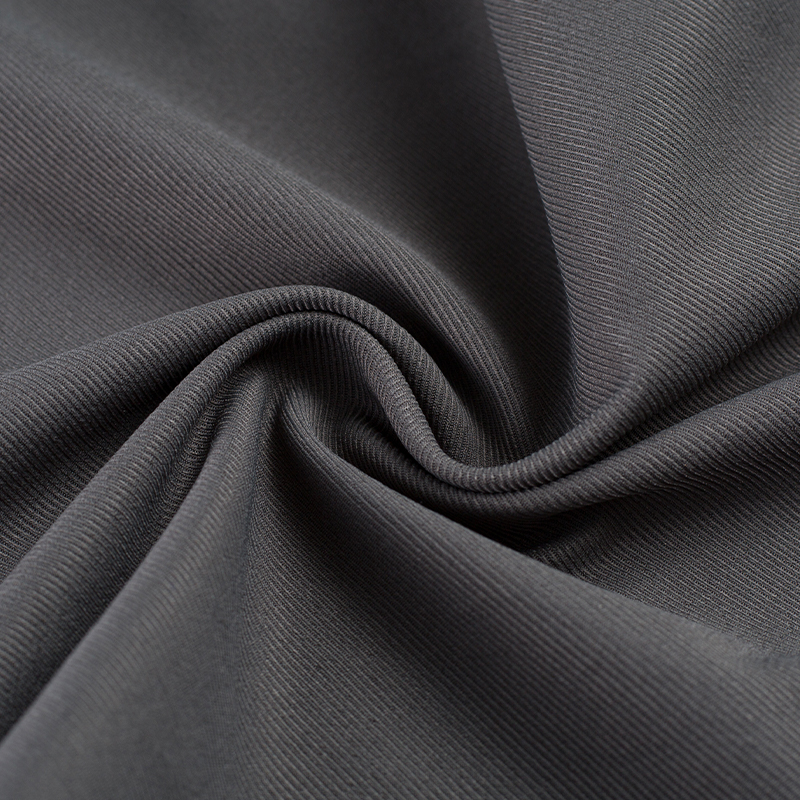
Utilizing 3/1 twill weave structure, the fabric surface displays clear diagonal lines. Compared to 2/2 twill, the texture is finer and softer, without obvious "harsh diagonal lines", making it visually more lightweight and transparent.
The fabric surface has a subtle textured feel (not a smooth surface). The faint yarn texture adds depth to the fabric while retaining a soft luster.
The fabric has a soft and smooth touch with excellent drape – natural folds that recover easily without stiffness.
Doris fabric itself has good breathability while also offering certain wrinkle resistance, making it relatively easy to wear and care for in daily use.
Suitable for making items such as shirts, chiffon blouses, flowing dresses, and long skirts. It can create a fresh and gentle daily style while also being used for elegant, drapey formal wear styles – it's a fabric that combines "lightness + quality".
| Category | Details |
| Company Name | Hongyuan Textile Industry |
| Number | DS586 |
| Item Name | Duolisi 3/1 Twill |
| Specification | 120D*120D + (120D + 40SP Monofilament Package) |
| Gram Weight | 205GSM |
| Density | 84*42 |
| Composition | 96%P; 4%SP |
| Address | No.7, Floor 112, Premium Product Zone, Shengze Town, Suzhou City |
| Factory | No.1788, Yuanqu Road, Shengze Town, Wujiang District, Suzhou City |
| Telephone | 0512 - 63062555; 0512 - 63062111 |
| Note | Data for reference only |
Sustainability used to mean sacrificing hand feel. That trade-off is disappearing fast, and Lyocell fabric is a large part of why. Spun from regenerated cellulose through a resource-efficient production process, it deli...
READ MOREChoosing a fabric for apparel is rarely just about look and feel anymore; sourcing and sustainability now weigh just as heavily on the decision. Lyocell twill fabric has become a favorite for designers and brands who wa...
READ MORESatin silk cloth fabric is one of the most sought-after materials in fashion and luxury textile production, prized for its glossy surface, fluid drape, and refined hand feel. For fashion brands, apparel manufacturers, a...
READ MOREWhen performance apparel needs to move with the body rather than against it, fabric choice is everything. 4 way stretch spandex fabric has become the industry benchmark for activewear, athleisure, and technical garments...
READ MOREIn the dynamic world of fashion textiles, the quest for the ideal fabric—one that balances aesthetics, performance, and sustainability—is perpetual. Designers and product developers are often faced with a fundamental choice: stick with traditional, well-understood materials like standard cotton twill or explore innovative alternatives. A compelling option that has emerged in this landscape is the ds586 smooth and breathable doris 3/1 twill fabric.
To appreciate the differences, one must first understand the basic building blocks of each fabric.
The Common Ground: The Twill Weave
Both fabrics share a common structural foundation: the twill weave. Characterized by a distinct diagonal rib pattern, the twill weave is renowned for its durability, dense structure, and excellent drape. The "3/1" designation specifically indicates that the weft thread passes over three warp threads and then under one. This asymmetry creates a pronounced, attractive texture that is more visually interesting than a plain weave. This shared architecture means both fabrics offer superior strength and a softer, more pliable hand feel compared to plain weaves of similar weight.
The Divergence: Fiber Composition
This is the core of their differentiation. A standard cotton twill is woven from 100% cotton yarns. Cotton, a natural cellulose fiber, is celebrated for its softness, breathability, and absorbency. However, it also has inherent limitations, such as a tendency to wrinkle easily and to shrink if not pre-treated.
In contrast, the ds586 smooth and breathable doris 3/1 twill fabric is a sophisticated blend of 96% polyester § and 4% spandex (SP). The specification of 120D*120D + (120D + 40S Monofilament Package) points to a high-density construction using fine, durable yarns. The critical component here is the "Doris fiber," which industry context suggests refers to a type of high-count regenerated cellulose fiber, similar to Modal or a refined polyester variant designed to mimic the favorable properties of natural fibers. This composition is engineered to overcome the shortcomings of pure materials.
The following table succinctly captures these fundamental differences:
| Feature | Standard Cotton Twill | DS586 Doris 3/1 Twill Fabric |
|---|---|---|
| Primary Composition | 100% Cotton | 96% Polyester, 4% Spandex |
| Weave Type | 3/1 Twill | 3/1 Twill |
| Key Structural trait | Distinct diagonal line | Distinct diagonal line |
| Base Fiber Origin | Natural | Engineered/Regenerated |
When placed side-by-side, the performance characteristics of the two fabrics reveal clear distinctions that directly impact their suitability for different applications.
Durability and Strength
Standard cotton twill is undoubtedly durable, making it a classic choice for workwear and denim. However, cotton fibers can weaken when wet and are susceptible to abrasion over extended periods, leading to fading and fiber breakage.
The ds586 smooth and breathable doris 3/1 twill fabric exhibits superior durability. The polyester component provides exceptional tensile strength and resistance to abrasion, stretching, and shrinkage. Fabrics made from polyester are inherently more resilient than cotton, retaining their shape and integrity through countless wash cycles. This makes the ds586 fabric a more robust choice for garments that require long-term wearability.
Comfort and Breathability
This is a critical area of comparison. Cotton's natural breathability is its hallmark. It absorbs moisture effectively, pulling sweat away from the skin, which provides a cooling sensation. This makes standard cotton twill comfortable for everyday wear in moderate climates.
The ds586 smooth and breathable doris 3/1 twill fabric approaches comfort from an engineered perspective. The use of Doris fiber, often associated with high moisture-wicking capabilities, allows the fabric to draw moisture away from the skin and spread it across the surface for rapid evaporation. While polyester is often criticized for being less breathable than cotton, advanced weaving techniques and fine yarns, such as the 84*42 density used in this fabric, create a structure that facilitates air circulation. The inclusion of 4% spandex is a significant advantage, providing a degree of stretch that 100% cotton cannot offer. This elastic recovery ensures freedom of movement and prevents the fabric from bagging out, maintaining a sleek, tailored appearance throughout the day. For business casual wear and light luxury wear, this combination of moisture management and stretch offers a higher level of consistent comfort.
Wrinkle Resistance and Care
The care requirements of a fabric are a major practical consideration for consumers. Standard cotton twill is notoriously prone to wrinkling, often requiring ironing to maintain a crisp, professional look after washing.
Here, the ds586 smooth and breathable doris 3/1 twill fabric holds a decisive advantage. Polyester fibers have excellent elastic recovery, meaning they return to their original shape after being bent or compressed. This inherent property grants the fabric superior wrinkle resistance. Garments made from this material emerge from a wash-and-dry cycle with minimal creasing, reducing or eliminating the need for ironing. This easy-care nature is a significant benefit for modern consumers seeking convenience without compromising on a polished appearance.
Aesthetic and Hand Feel
Cotton twill has a classic, matte finish and a soft, familiar hand feel that becomes even softer with repeated washing. Its aesthetic is rooted in tradition and authenticity.
The ds586 smooth and breathable doris 3/1 twill fabric is designed for a more contemporary market. Its surface is described as "smooth," likely resulting from the fine, continuous filament yarns used in its construction. This gives it a slightly more refined and luxurious sheen compared to the rustic feel of cotton. The hand feel is "soft and smooth," offering a sleek, fluid drape that is highly desirable in modern women's apparel for categories like dresses and high-end pants/trousers. The clarity of its twill line enhances its visual depth, contributing to its light luxury appeal.
The environmental impact of textiles is an increasingly important factor for brands and consumers. Cotton farming is water-intensive and often relies heavily on pesticides and fertilizers, unless it is certified as organic.
The ds586 smooth and breathable doris 3/1 twill fabric presents a different environmental profile. If the "Doris fiber" is a regenerated cellulose fiber like Modal, it is derived from renewable wood pulp, making it a more sustainable choice from a raw material perspective. Even as a polyester blend, its exceptional durability contributes to a longer product lifespan, which is a key principle of sustainability. A garment that lasts longer reduces the frequency of replacement and, consequently, waste. Furthermore, the fabric's wrinkle-resistant properties can lead to energy savings in the consumer use phase, as less ironing is required.
The differing properties of these two fabrics naturally steer them toward different segments of the market.
Standard cotton twill remains the go-to choice for authentic, rugged applications like blue jeans, traditional chore coats, and uniforms where a broken-in, classic look is desired.
The ds586 smooth and breathable doris 3/1 twill fabric, with its 205GSM weight, positions itself as a premium material. Its primary applications are in segments that demand a balance of elegance, comfort, and performance:

Phone: +86 18806251599
TEL: +86 0512 63062555

Email: [email protected]

Address: No. 1788, Yuanqu Road, Shengze Town, Wujiang District, Suzhou City, Jiangsu Province, China